6 metrics every gym should track, but most don't

by
Nicole Franco
on
Most gym software tells you who walked through the door. That's not enough.
Check-in data tells you a member showed up. It doesn't tell you whether they had a good session, whether they're progressing, or whether they're three weeks away from cancelling. The gyms that retain members long-term aren't just tracking attendance. They're tracking behavior, performance, and engagement at a resolution that actually predicts what happens next.
Here are six metrics that separate reactive gym management from proactive member retention.
1. Workout completion rate
What percentage of members who start a session actually finish it?
Most facilities track check-ins and call it a day. But a member who checks in and leaves after ten minutes counts the same as one who completes a full 45-minute session.
Completion rate gives you a clearer picture of session quality and drop-off patterns are one of the earliest signals of churn. Members who consistently leave early are telling you something.
Why it matters for management: Churn rarely comes out of nowhere. Completion rate lets you identify at-risk members weeks before they cancel, early enough to intervene.
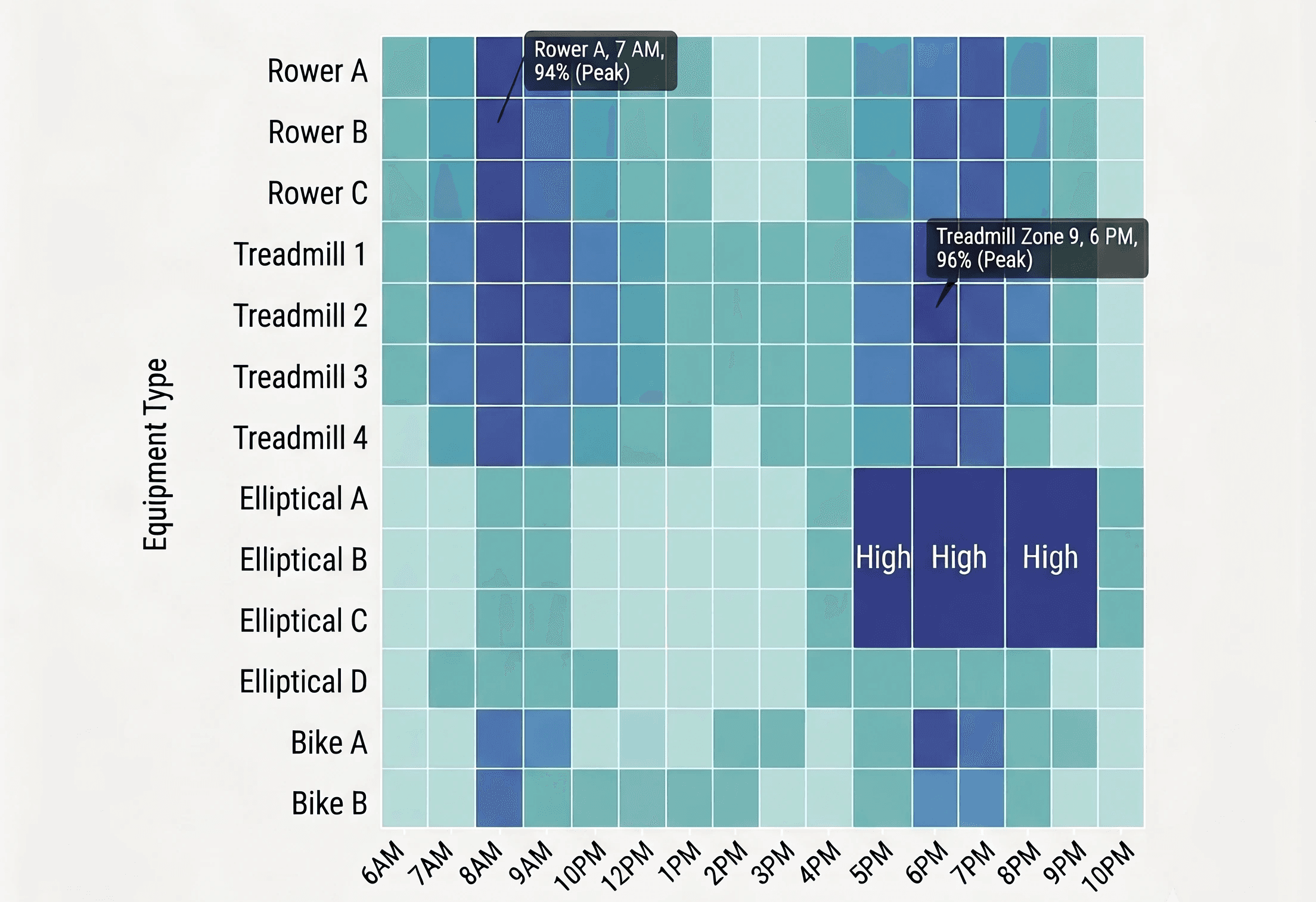
2. Equipment utilization by hour
Not just "how busy is the gym" but which machines are being used, when, and for how long.
Generic business metrics don't help you make decisions. Hourly utilization data does. It shows you which equipment is consistently overloaded, which machines sit idle (and why), and how to schedule classes around natural peak usage rather than guesswork.
Why it matters for management: Purchasing decisions, layout changes, and class scheduling all become significantly easier when they're backed by actual usage data rather than staff intuition.
3. Member performance progression
Are your members actually getting fitter?
Tracking metrics like watts, stroke rate, split times, or heart rate zones over time answers the most important question a member has: Is this working? Members who see measurable progress stay. Members who feel stuck leave and they often can't articulate why, because they have no data either.
Performance data is also essential for coaches. It gives them an objective basis for adjusting programming, identifying plateaus early, and having meaningful conversations with members about their progress.
Why it matters for management: Retention is tied directly to perceived value. When members can see their improvement in numbers, the gym becomes irreplaceable.
4. Session frequency per member
Not just "active vs. inactive" but the trend line.
A member going from four sessions per week to two over the course of a month is a meaningful churn signal. But it's only visible if you're tracking frequency at that resolution. Most gym software flags absence after it's already too late, when a member hasn't shown up in 30 days rather than when they started showing up less.
Why it matters for management: Frequency trends let you act on early warning signs. A well-timed outreach at day three of an unusually long gap is far more effective than a win-back campaign after a cancellation.
5. Class booking behavior
Most gyms track attendance. Far fewer track demand.
There's a meaningful difference between a class that fills up and a class that fills up in 4 minutes, has a waitlist of 12, and sees 80% of those members book the same slot the following week. That's not just a popular class, that's a retention engine, and it deserves a second slot before you lose those members to a competitor with more availability.
The same logic applies in reverse. A class that fills to 70% with low repeat bookings and high last-minute cancellations is telling you something. Not just that it underperforms but why: the format, the timing, or the instructor may not be landing.
Attendance tells you what happened. Booking behavior tells you what members actually want.
Why it matters for management: Programming decisions made on attendance alone leave money and retention on the table. Booking timing, waitlist depth, and repeat booking rates reveal the demand signals that attendance numbers hide.
6. Post-session return time
How long between a member's sessions, and is that gap growing?
A member who used to return every two days and is now returning every five is drifting. Without data, you don't see that shift until it becomes a cancellation. With it, you can trigger an automated nudge at exactly the right moment, before the habit breaks entirely.
Why it matters for management: Behavioral drift is the most common cause of churn. Tracking return intervals at the individual level turns a reactive cancellation problem into a proactive engagement opportunity.
The common thread
None of these metrics require a sophisticated data science team. They require c: equipment, scheduling software, and member profiles that talk to each other and surface the right signals at the right time.
Gyms that track this data don't just understand their members better. They make better decisions about staffing, equipment, programming, and retention and they do it before problems become expensive.
The question isn't whether this data is worth having. It's whether your current setup is capturing it. With connected fitness products, all of this becomes possible; equipment, scheduling, and member data working together in one ecosystem, surfacing the right signals at the right time.
If you want to understand exactly how this works in practice, we'd love to show you. Get in touch.


